

Last Updated: 19 November 2026
Quick Summary
Yes, you can put a different shade on a ceramic lamp. The shade and base are separate parts on nearly every table lamp, so swapping one is normal. Just match the new shade's fitting and size to your base so the lamp still looks meant to go together.
- Check whether your shade uses a spider, UNO or lampholder ring fitting before buying.
- Measure the base's widest width, height and the shade's top, bottom and slant height.
- As a rough rule, the shade's bottom diameter should be close to the base's widest width.
- Give a patterned or textured base a plain linen, cotton or soft neutral shade.
- A reducer ring usually fixes a shade that wobbles on the fitting.
Table of Contents
- Yes, You Can Change the Shade on a Ceramic Lamp Base
- Lamp Shade Fitting Types and How to Match Them to Your Base
- How to Measure for a Replacement Lampshade and What Size Fits a Table Lamp
- Matching a Lampshade to a Patterned Lamp Base
- Common Fitting Problems and How to Fix Them
- Frequently Asked Questions
Yes, You Can Change the Shade on a Ceramic Lamp Base
Yes, you can put a different shade on a ceramic lamp. The shade and base are separate parts on nearly every table lamp, and swapping one is normal. People often ask this when they like their lamp but want softer light or a fresh look without a whole new fitting. The trick is matching the new shade to the base so the lamp looks as though it was always meant to go together.
Lamp Shade Fitting Types and How to Match Them to Your Base
The most common is a spider fitting: a frame with arms that sit on the lamp's harp, held by a finial on top. The second is a UNO fitting, where the shade clips onto the bulb holder, and some shades sit on a lampholder ring instead. Check the fitting type on your current shade, confirm the shade's inner diameter fits your lampholder or harp, and check whether it needs a reducer ring. A shade sold as "shade only" doesn't come with a bulb, cable or fitting, and styled photos often show it lit, so read the listing. To see how a fabric shade sits on a ceramic base, our textured ceramic table lamp shows the pairing in a real setting.
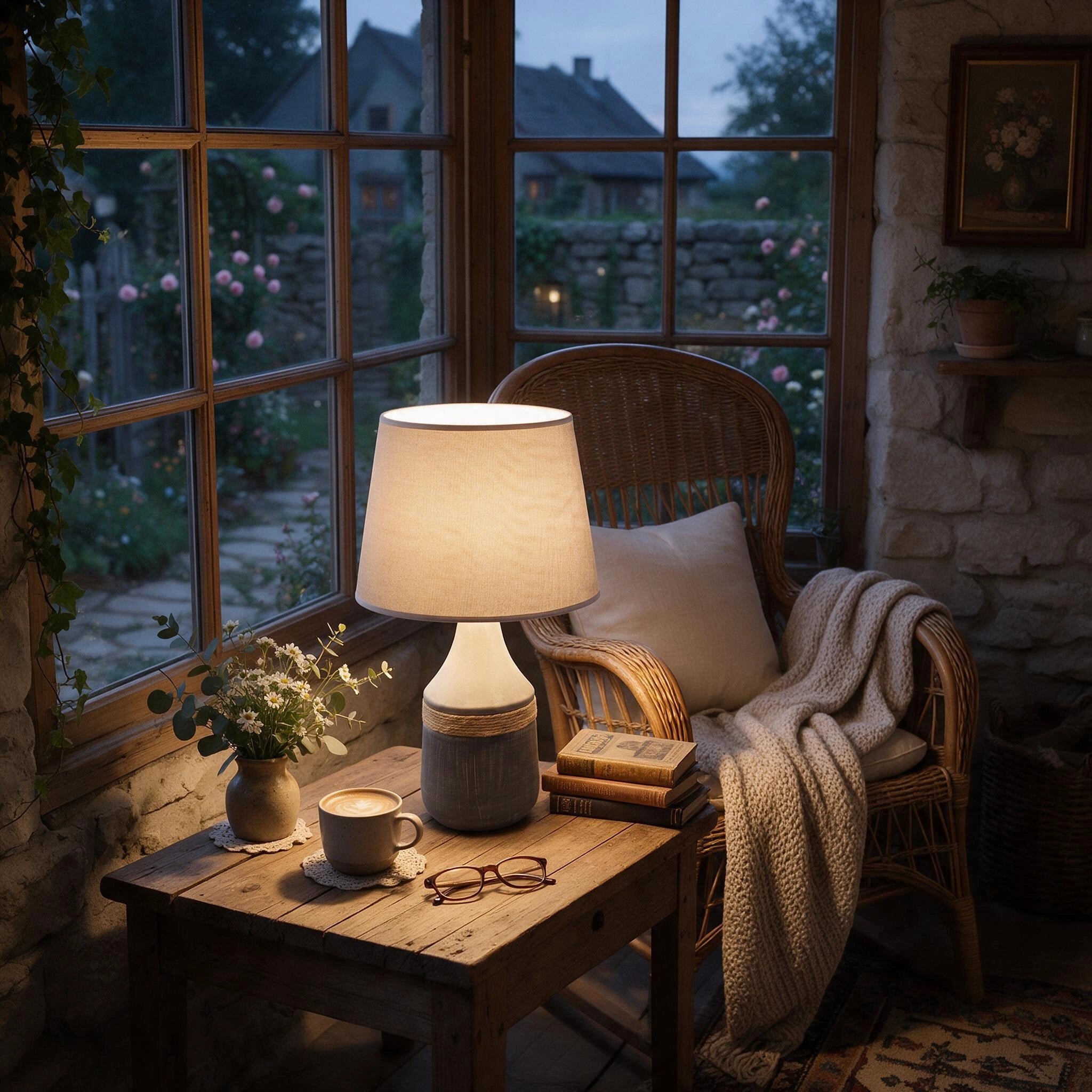
Here are the main shade fittings and what each one needs from your base.
| Fitting type | How it attaches | What to check |
|---|---|---|
| Spider fitting | Frame arms sit on the lamp's harp, held by a finial | Shade's inner diameter fits your harp |
| UNO fitting | Shade clips onto the bulb holder | Fits your lampholder |
| Lampholder ring | Shade sits on a ring | Whether it needs a reducer ring |
How to Measure for a Replacement Lampshade and What Size Fits a Table Lamp
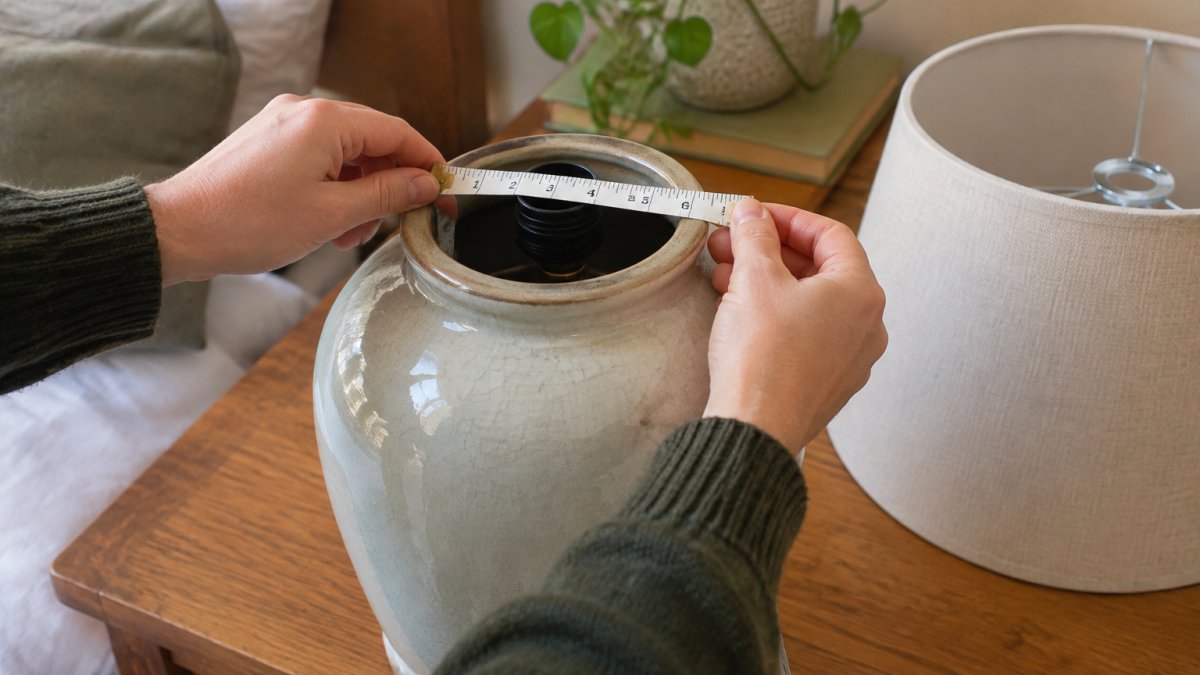
Measure the base's widest width and height, then the shade's top diameter, bottom diameter and slant height. Check the drop too: too deep and it covers the whole lamp; too shallow and the bulb shows. As a rough rule, the shade's bottom diameter should be close to the base's widest width, much narrower looks top-heavy, much wider can overhang a narrow bedside table. If you're choosing a new ceramic lamp too, our guide to ceramic table lamps for living rooms covers size and bulb choices.
Matching a Lampshade to a Patterned Lamp Base
A patterned or textured base does most of the talking, so give it a quiet shade, plain linen, cotton or a soft neutral fabric lets the ceramic stand out. For a plain ceramic base you have more room: a woven or open-weave shade adds texture and casts soft patterns on the wall, while a fabric shade softens the light and hides the bulb. An open weave over a dining table can look lovely, but beside a reading chair it may leave the bulb in view. A bedside lamp usually suits a warm, low glow, so a fabric shade in a soft tone is a sensible choice.
Common Fitting Problems and How to Fix Them
Most shade-swap problems come down to fit, not the shade itself. If the shade wobbles, the fitting is slightly too big and a reducer ring usually solves it; if it sits too low, the drop is too deep or the harp is the wrong height. A bulb touching the shade means the shade is too small or shallow, and a finial that won't tighten means the thread doesn't match, take the old finial with you. If a fix needs a new fitting or any change to fixed wiring, ask a qualified electrician (Introduction to electrical safety). Swapping a shade is usually a simple job; for anything involving the electrics, speak to a qualified electrician.
Changing a shade is one of the simplest ways to freshen a lamp you already love. Start with the fitting type, take your measurements, then choose a shade that lets the ceramic base do its thing. If you'd like to see how a fabric shade and ceramic base work together, browse our lighting collection and picture one on your own bedside table.
Frequently Asked Questions
Can you put any lampshade on a ceramic lamp?
Not quite. The shade needs to fit the lampholder and suit the base. Check whether the shade is a shade-only listing or comes with a fitting, and compare the shade's inner ring with your existing lampholder. A shade that mentions E27 or B22 does not automatically fit, so look at the opening size and whether a reducer ring is needed. Also weigh up the shade's width and drop against the ceramic lamp base, so it does not overhang a narrow bedside table or hang too low in a hallway.
How do you measure a lamp for a replacement shade?
Measure the widest part of the ceramic lamp base, then measure the height from the base to the top of the lampholder. For the shade itself, measure the top opening, the bottom opening and the height. Check the drop once hanging, since a deep shade may sit too low. Write the numbers down before you shop so you can compare listings properly.
Should a lampshade be wider than the lamp base?
Usually, yes. A shade narrower than the base tends to look top-heavy and can leave the bulb visible from the side. Compare the bottom opening with the width of the base, then adjust for the room. On a slim bedside table, a slightly narrower shade may suit better, while a wider shade on a console table spreads light further. Matching a lampshade to a patterned lamp base also means checking the shade does not fight the pattern.
